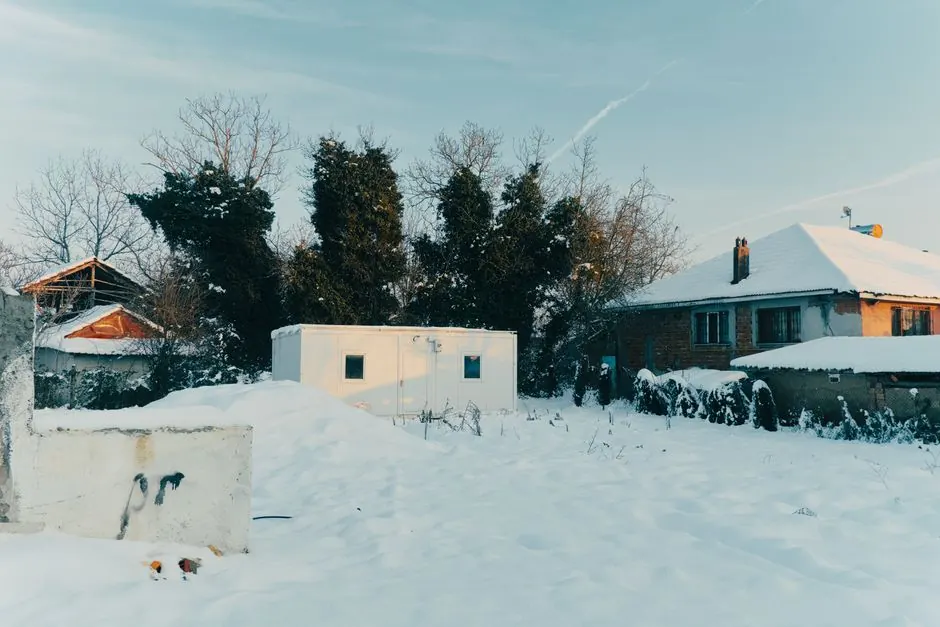
Yes, slab leaks get worse in Olathe winter. Freezing soil and the daily freeze-thaw cycle widen existing cracks in your under-slab pipes, and the cold also raises water pressure inside the line, so a leak that dripped slowly in October can soak your foundation by January. If you have already noticed a warm spot on the floor or a water bill that crept up last month, the next 90 days are when that small problem turns into an excavated slab. This post covers why Olathe winters are hard on slab plumbing, the signs to watch, what actually happens underground, and how to prevent slab leaks in winter Olathe before the ground thaws.
Do slab leaks get worse in Olathe winter? The short answer
Do slab leaks get worse in Olathe winter is a question we hear every November, and the honest answer is yes - cold weather accelerates almost every slab leak we see in Johnson County. A slab leak is a water leak in the hot or cold supply line running beneath your home's concrete foundation, and it gets worse in winter because the soil around that pipe expands when it freezes and contracts when it thaws, flexing the slab and the pipe inside it dozens of times per season.
Olathe sits in a climate band where the ground freezes to roughly 18 to 24 inches most winters, then thaws during the January and February warm spells that push temperatures into the 50s. That repeated cycle is the problem. Each freeze-thaw event opens existing hairline cracks in copper a little wider, and each widening releases more water into the soil under your slab.
We handle Slab Leak Repair Olathe KS calls all year, but our winter volume runs two to three times our summer volume. The pattern is consistent: a leak that was a slow drip in September becomes a visible wet spot, a spike in the water bill, or a cracked tile by February.
Why cold weather makes slab leaks worse in Olathe Kansas
Cold weather makes slab leaks worse in Olathe Kansas because three separate forces hit the pipe at the same time: soil movement, thermal contraction, and higher line pressure.
Soil movement under the slab
Olathe's soil is a mix of clay and shale that holds water and expands when it freezes. When that soil freezes around your foundation, it lifts and shifts the slab by fractions of an inch. Those fractions are enough to shear a 40-year-old copper line that was already stressed.
Thermal contraction of the pipe itself
Copper and PEX both shrink in the cold. A hot water line that runs at 120 to 140 degrees inside the pipe cools to groundwater temperature - roughly 52 to 58 degrees in this part of Kansas - when you leave for work or turn the fixture off. That temperature swing happens several times a day in winter, and every swing puts stress on every joint and elbow under the slab.
Higher pressure from cold supply water
Cold water is denser and the municipal supply in Olathe often runs 10 to 15 psi higher in winter than in summer. That extra pressure pushes more water through any existing pinhole leak. A leak that lost a cup an hour in July can lose a gallon an hour in January.
How Olathe's freeze-thaw cycle stresses the slab
Olathe's freeze-thaw cycle stresses the slab because the ground here freezes and thaws repeatedly from late November through early March rather than staying frozen solid like it does in Minnesota. The National Weather Service records roughly 60 to 80 freeze-thaw transitions per winter in Johnson County, and each one is a small earthquake for your foundation.
Here is what that looks like in practice:
- Late November to mid-December: the first hard freezes hit. Soil contracts, and small leaks that were dormant all fall start weeping.
- January: the coldest stretch. Ground stays frozen for two to three weeks at a time, and slab leaks in winter Olathe KS tend to show up as warm spots on the floor because the hot water line is now the only heat source under that part of the slab.
- February to early March: warm spells thaw the top 12 to 18 inches of soil. Water that was trapped in the frozen ground now has somewhere to go - often up through the slab and into your flooring.
We see this pattern in older neighborhoods where the housing stock dates to the 1970s and 1980s and the original copper supply lines are now 40 to 50 years old. If your home was built before 1990 and still has the original under-slab copper, this is the winter it is most likely to fail.
Warning signs of a winter slab leak in your Olathe home
Warning signs of a winter slab leak in your Olathe home are easy to miss because the water is under concrete and the evidence shows up somewhere else. Watch for these five:
- A warm spot on the floor. This is the classic hot water slab leak symptom. If one patch of tile or hardwood feels warm to bare feet while the rest of the floor is cold, the hot water line under that spot is leaking.
- A water bill that jumps 20 to 40 percent. A slab leak that loses a gallon an hour adds roughly 720 gallons a month. In Olathe that is usually $30 to $60 on your bill.
- The sound of running water when nothing is on. Put your ear to the floor near the water heater or in a hallway. A faint hiss or trickle that stops when you shut off the main is a slab leak.
- Damp or buckling flooring. Engineered hardwood cups, laminate separates at the seams, and carpet feels cool and damp in one area.
- Cracks in the slab or in the tile above it. Hairline cracks that appear or widen between December and March usually mean the soil under the slab is moving because it is saturated.
If you see two or more of these together, shut off the main and call us. A leak that is caught in December is a two-day repair. The same leak in April is often a foundation repair.
What happens to slab leaks in winter in Olathe
What happens to slab leaks in winter in Olathe is that they progress from a plumbing problem to a structural problem in about 60 to 90 days. Here is the timeline we see most years:
Weeks 1 to 3: the leak is still small. Water escapes into the gravel bed under the slab and drains away. You might notice nothing at all, or just a slight uptick in the water bill.
Weeks 4 to 8: the soil under the slab is saturated. It can no longer drain fast enough, so water starts wicking up through the concrete. This is when you see the warm spot, the damp carpet, or the first hairline crack in the tile.
Weeks 9 to 12: hydrostatic pressure builds under the slab. Water finds the path of least resistance - often a cold joint, a plumbing penetration, or the edge of the foundation. You may see water pooling around the foundation outside, or efflorescence (white mineral staining) on the stem wall.
Beyond 12 weeks: the soil under the slab has washed out enough that the slab is no longer fully supported. Cracks widen, doors stick, and the repair cost goes from a few hundred dollars for a spot repair to several thousand for a Foundation Damage from Slab Leaks Olathe KS repair.
How do I prevent slab leaks in Olathe winter?
How do I prevent slab leaks in Olathe winter comes down to four things you can do before the first hard freeze, plus one thing you should do every January.
Before the first freeze (October and November)
- Disconnect garden hoses and shut off exterior spigots. A frozen exterior line can back up pressure into the house side of the system.
- Insulate exposed pipes in the garage, crawlspace, and any unheated space. Foam pipe sleeves cost about $2 per foot and take an afternoon to install.
- Check your water pressure. Anything above 80 psi stresses every joint in the house. A $25 pressure-reducing valve pays for itself the first winter.
- Know where your main shutoff is. If a pipe bursts at 2 a.m., you want to be able to kill the water in 30 seconds, not 30 minutes.
During winter (December through February)
- Keep cabinet doors open under sinks on exterior walls so warm air reaches the pipes.
- Let a pencil-thin stream of water run from the farthest fixture overnight when the forecast drops below 15 degrees. Moving water does not freeze.
- Watch your water bill every month. A sudden jump is the cheapest early warning you will ever get.
If you want a professional set of eyes on the system before the cold settles in, our Slab Leak Detection Olathe KS service uses acoustic listening and thermal imaging to find small leaks before they become big ones. We can usually tell you in under an hour whether your under-slab lines are sound or whether you are looking at a repair this winter.
Common mistakes Olathe homeowners make with winter slab leaks
Common mistakes Olathe homeowners make with winter slab leaks almost always fall into one of these five buckets:
1. Waiting for spring. The single most expensive mistake. A leak that costs $600 to repair in January can cost $4,000 to $6,000 by April once the foundation is involved. Cold weather does not pause the damage - it accelerates it.
2. Assuming it is condensation. A damp spot on the floor in winter is almost never condensation. If it reappears in the same place after you dry it, it is a leak.
3. Cranking the water heater. Some homeowners raise the water heater temperature to compensate for what feels like a hot water shortage. That just increases thermal stress on the already-leaking line and can make the leak worse.
4. Using stop-leak products. Epoxy and stop-leak additives can temporarily seal a pinhole, but they also coat the inside of every other pipe in the house. In our experience they delay the real repair by a few weeks and add $200 to $400 to the eventual bill.
5. Ignoring the water bill. The water bill is the cheapest diagnostic tool you own. If it jumps 20 percent in a month and nothing else changed, you have a leak.
When to call a professional
Call a professional when you have two or more of the warning signs above, when your water bill jumps more than 15 percent in a single month, or when you can hear water running with every fixture off. Those three situations are the point where a $200 to $400 diagnostic visit saves you thousands in foundation work.
At Olathe Slab Leak Specialists, we locate the leak first with acoustic and thermal equipment, show you exactly where it is, and give you a flat price before we open anything up. We repair hot water lines, cold water lines, copper, PEX, and sewer lines under the slab, and we handle the concrete work too. If the line is too far gone to repair, we will tell you and walk you through rerouting options instead of selling you a repair that will not hold.
We work in every part of Olathe, from the older homes near Slab Leak Repair in Downtown Olathe where 1950s copper is finally giving out, to newer builds on the west side where PEX fittings are the more common failure point. Same-day and next-day appointments are usually available through the winter.
Frequently Asked Questions
Do slab leaks get worse in Olathe winter?
Yes. Freezing soil, thermal contraction, and higher winter line pressure combine to widen existing cracks and increase water loss by 2 to 4 times compared to summer. A leak that drips in October can soak your foundation by January.
Can freezing temperatures cause slab leaks in Olathe KS?
Freezing temperatures can cause a slab leak, though most winter slab leaks start as small pre-existing cracks that the cold makes worse. The freeze-thaw cycle flexes the slab and the pipe inside it, and that movement opens hairline cracks into full leaks.
What happens to slab leaks in winter in Olathe?
They progress from a slow drip to a saturated slab in roughly 60 to 90 days. Water saturates the soil, wicks up through the concrete, and eventually causes cracked tile, buckled flooring, and foundation movement if it is not repaired.
How do I prevent slab leaks in Olathe winter?
Disconnect hoses before the first freeze, insulate exposed pipes, keep water pressure under 80 psi, and watch your monthly water bill. During cold snaps, open cabinet doors under exterior sinks and let a thin stream run overnight from the farthest fixture.
How much does winter slab leak repair cost in Olathe?
Typical 2026 pricing in Olathe runs $600 to $1,800 for a spot repair on an accessible line, and $2,500 to $6,000 if the leak is under finished flooring or requires rerouting. Diagnostic visits are usually $200 to $400 and are credited toward the repair.
Get help with Slab Leak Repair in Olathe
If your floor is warm, your water bill is climbing, or you can hear water running when nothing is on, do not wait for spring. Call Olathe Slab Leak Specialists at (913) 358-1454 and we will locate the leak, give you a flat price, and fix it before the next freeze makes it worse.